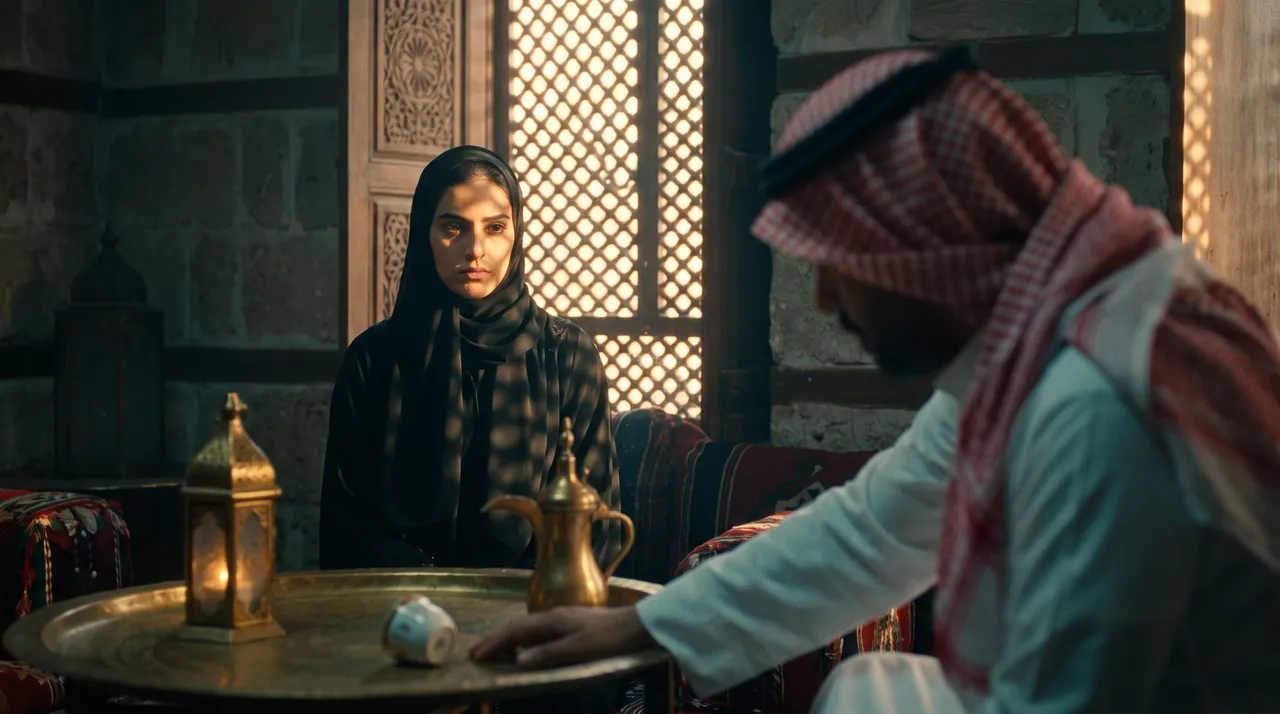
A viewer reaches the end of episode one. The images looked convincing. Now comes the question that matters for the series: do they want episode two?
For Arabic AI microdrama, that is a useful production brief. Build a character whose next decision matters, give that character a credible voice, and create a process that can carry both into another episode.
The proposal below is a three-episode pilot plan. It is editorial guidance, not a formula validated by an audience test.
There is already a regional creative field
Rotana Media's partnership announcement with Scene describes original vertical productions and adaptations. WATCH IT's developer release notes describe original mini-series with episodes of one to two minutes.
These are examples of regional activity, not evidence that either company uses AI throughout production or has proved the economics of every title.
Media City Qatar and Omdia put GCC microdrama revenue at $38.9 million in 2025 and forecast $73.7 million for 2026. That category includes international content. It does not tell you whether an audience will follow your Arabic AI series.
The opportunity deserves a specific story and a distribution decision, rather than an assumption that the market is empty.
Give the cliffhanger a consequence
For an original illustrative premise, a young footballer receives help securing a trial. The person who helped now expects a favour that would betray a teammate.
The production can begin around a conversation and a decision, without needing to solve an entire football match.
| Episode | What changes | Why the next episode matters |
|---|---|---|
| One | The player discovers the condition attached to the opportunity | Will they accept it or risk losing the trial? |
| Two | Their attempt to avoid choosing harms the teammate's trust | Can they repair the damage without revealing everything? |
| Three | They make a choice and face its immediate cost | What kind of person will they become after this decision? |
This is a story sketch to develop, not a finished script or a claim about audience preferences. Each episode needs a satisfying piece of drama as well as an unresolved question. A reveal should change what someone does.

Build the pilot around what must recur
A proposed starting scope is three connected episodes, roughly 60 to 90 seconds each, with a small cast and a returning location. The duration is a test-design choice, not an industry rule.
Prepare a series reference file before production:
- Character: approved appearance, wardrobe and deliberate changes over time.
- Voice: dialect, performance intention, pronunciation and speaking relationships.
- Place: room layout, entrances, key objects and recurring camera positions.
- Story state: who knows what, what has happened and what the next scene must remember.
Continuity includes change. A bruise or a moved object may be intentional; the record should explain why.
Test a difficult exchange early. If two characters cannot interact convincingly, choose a different staging or production method before building a season around that interaction.
Direct Arabic as performance
Choose a particular setting and audience. A Saudi workplace comedy, a Lebanese relationship drama and an Egyptian mystery need different language and social detail.
Have someone fluent in the intended dialect review the writing and finished sound. Listen for intention, pauses and emotional credibility as well as pronunciation. Review it in the edit, where a reaction shot can change the meaning of a line.
If generated speech falls short, plan for a performer, another method or a rewritten beat. Keep the story's needs in charge of the production choice.
Design the reveal for a phone
A detail that drives the plot must be readable in the vertical frame: an expression, an object or the distance between two people. Leave space for subtitles and the intended platform's interface.
Watch the finished sequence on a phone. Check the frame with captions and sound, rather than assuming the editing monitor represents the audience experience.
The vusion.art model-selection guide can help shortlist workflows for individual shots. It cannot establish continuity across your series; that belongs in the pilot.
Count the cost of approved episodes
Track writing, art direction, performances, generation, rejected attempts, finishing, sound, captions and review. Record permissions and delivery work too.
Calculate production cost per approved finished minute using stated cost categories. Keep reusable development costs separate from recurring episode costs, and track audience acquisition separately. Otherwise a cheap production can conceal an expensive route to viewers.
Before releasing the test, decide where viewers will find it and how they will reach the next episode. Commissioning, licensing, brand funding and independent distribution need different plans.
Decide what the pilot must teach you
| Evidence from the pilot | The next decision |
|---|---|
| Viewers admire the images but cannot explain the conflict | Rework the story and clarity of the scenes |
| Viewers understand the conflict but stop before the payoff | Examine pacing, expectation and the point of departure |
| Viewers want the next episode, but continuity requires excessive repair | Revise the production method and estimate |
| Story interest and delivery both look promising | Test again with a broader relevant audience before expanding |
Track completion and progression to the next episode with clearly defined denominators. Ask viewers what they understood and what made them continue. Set success criteria appropriate to the audience, outlet and sample; a small pilot cannot prove demand for a season.
The pilot should show whether the story earns another episode, and whether the team can deliver it.
Research and disclosure, 7 October 2026: Source-based analysis with a proposed pilot, not a completed vusion.art production or audience test. Company announcements describe their own activities; the market figure is a forecast for the category. Published by vusion.art, which develops an AI production platform. Images are editorial illustrations.